Wednesday, November 23, 2016

SANTA CASA

at the corner Santa Izabel Church and along the road on the left past an empty lot Educandário Bento de Abreu Sampaio Vidal.

Carlus Maximus: me lembro nitidamente de estar presente quando puseram a Pedra Fundamental para a construção do Educandário no início de 1960. Eu nunca cheguei a ver o edifício pronto pois minha família mudou-se de Marília em dezembro 1960. 

Nessa foto aérea dá para notar como Marília era circundada de cafezais nos anos 30s, 40s e 50s. Bastava sair das ruas principais que a gente já 'caía' num cafezal imenso. Era assim perto do Cemitério.

Me lembro que quando era pequeno fui com minha Mãe ao Cemitério, pois ela gostava de visitar o túmulo de sua Mãe que tinha falecido em 1934. De-repente começou a formar um temporal e todo mundo começou a correr para perto do único ponto de ônibus que havia por perto. Uma rajada de vento passou e levou meu bonezinho (devia ter eu 5 anos) que subiu como um balão e foi levado para dentro do cafezal, que mais parecia um oceano verde escuro... dava medo só de ver.

Santa Izabel Church is on the corner of Rua Vicente Ferreira - where Santa Casa is located - and Rua Brigadeiro Eduardo Gomes, going up to Avenida Cascata... rua 21 de Abril starts off at Educandário Bento de Abreu S.V.
Santa Casa medical staff - May 1958; Olguinha Zezzi writes at FB:  Dr. Persio de Carvalho está ao lado do Dr. Adhemar de Toledo Senior; Dr. Granadino de Baptista, Dr. Catalan, que está ao lado do Dr. Gustavo Godoy; Dr. João Batista Foloni está atrás do Dr. Adhemar de Toledo Filho; Dr. Sebastião Mesquita está atrás do Dr. Lourenço Sene; Dr. Casela está em frente do Dr. Persio.

Thanya Viana Catalan goes even further and writes: meu querido pai, Dr. Nicolau Catalan Filho, hoje com 90 anos e sem nenhum sinal de perda de memória, conseguiu lembrar a maioria dos nomes de seus colegas e amigos:  1. Dr. Mendes Filho; 2. Dr. Castro Jr.; 3. Dr. Shibazaki; 4. Dr. Simão Ribeiro; 5. Dr. Ademar Oliveira; 6. Dr. Arnaldo Barros; 7. Dr. Lourenço Senne; 8. Dr. Ferreira Bueno; 9. Dr. Pedro Teruel; 10. Dr. Salvestre; 11. Dr. Guerzoni; 12. Dr. Harita; 13. Dr. Catalan (meu Pai); 14. Dr. Gustavo Godoy; 15. Dr. Mesquita; 16. Dr. Ademar; 17. Dr. Vendramini; 18. ....; 19. Dr. Granadino; 20. Dr. Casela; 21. Dr. Cardeal; 22. Dr. Foloni; 23. Dr. Hilario; 24. Dr. Taminato; 25. Dr. Aurelio; 26. Dr. Persio; 27. Dr. Reinaldo; 28. Dr. Battistetti; 29. Dr. Bellucci; 30. Dr. Salum;  31. Trentini; 32. ... ; 33. Dr. Ademar Toledo & 34. Dr. Campos Neto.
dr. Catalan; dr. Salum.
Nicolau Catalan on his wedding day. 
Unveiling of Mr Bento de Abreu Sampaio Vidal's bust at Santa Casa's main entrance... 
Santa Casa in the 1950s. 

Saturday, November 19, 2016

President João Goulart visits Marilia - 4 April 1963

from left to right: Liana Eppinghaus Barbalho Silva Teles, Diane Denno (North-American exchange-student then) & President João Goulart at Mayor Tatá's house (Octavio Barreto Prado) in Marilia - 4 April 1963.
5 April 1963 - President João Goulart's speech at Marilia-SP was published by 'Correio da Manhã', Rio de Janeiro's prestigious daily. Marilia was celebrating its 34th anniversary.
Fernando Augusto Manhães (boy), Archimedes Manhães, President Getulio Vargas, Roberto Alves, Matsubara, Aparicio Penteado & Paulo Matsubara. 

Gilberto Giometti wrote: uma vez fui a essa fazenda do sr. Matsubara, na Alta Paulista, com Fernando Manhães. Andamos à cavalo e nos divertimos muito. Tinha 12 anos de idade. 
President Getulio Vargas autographed 'A política trabalhista no Brasil' to Archimedes Manhães on the 1st day of January 1951. 

Sunday, October 16, 2016

Dispute about a Marilia 1930s photo


Avenida Sampaio Vidal looking East with the 'Gothic façade' of the original Marilia Tennis Club in 1939.

This picture was published at daily 'Correio de Marilia' some time in the 1990s saying this Protestant church built on Avenida Sampaio Vidal some time in the early 1930s was turned into the Marilia Tennis Club. As we don't have any other proof that this is true I leave the matter open to speculation. 

I find it tremendously unlikely that a church that had just been built would surrender its hard fought place in the sun to a sporting club. It's hard to believe such story., 

Well, anyway I'm open to suggestions and eager to see more photos of the site if they're available. 

16 October 2016.


2 years later:

Everthing is open to interpretation. What happened here with this caption published by 'Correio de Marilia' is: 'A primeira sede do Marilia Tennis Club tinha fachada de uma igreja protestante...' 

When the newspaper printed this sentence: 'The first seat of Marilias Tennis Club HAD the façade of a Protestan church'... what they really meant was that the 'Tennis Club façade LOOKED LIKE a Protestan church'...

It didn't mean it HAD BEEN a Protestan church.

You see how devious the way one builds a sentence may be? 

Now, I could finally understand what the newspaper man meant in the first place...  

14 April 2017.

Sunday, September 11, 2016

Monday, August 15, 2016

Oswaldo Mendes, actor & theatre director

Luiza Maranhão, Paulo Autran, Tereza Rachel, Jairo Arco e Flecha & Oswaldo Mendes. 
The cast of 'Liberdade, Liberdade' when it toured Marília in 1967; Paulo Autran (in black) is the fourth on the front row (from left to right), with Luiza Maranhão on the left and Tereza Rachel on the right, Jairo Arco-e-Flecha (also in black) and Oswaldo Mendes.
Osvaldo Ramos aka Oswaldo Mendes.

Oswaldo Mendes who was born and raised in Marilia moved to São Paulo in the mid-1960s and made himself a brilliant career as an actor and theatre director. Here's his latest work 'Trotski no Exilio' at Casa do Saber as seen by newspaper 'O Estado de S.Paulo' 27 November 2015. 

Wednesday, July 20, 2016

1938 Agricultural Fair - Marilia - April-May

At Marilia's 10th anniversary in April 1938  - there was an Agricultural Fair where the new city's produce could be exhibited to people coming from all over the state. Here's part of a catalogue that was printed in Sao Paulo to be sold at the Fair. Thanks to Wilza Aurora Matos who donated her Grandfather's own copy to Marilia's Historical Records Commission and posted it on Facebook.


Art Deco idealized view of 1a. Exposição de Marília - April 1938.


Texaco filling station on the corner of Avenida Sampaio Vidal with Rua Tamandaré in 1931.
blue print of Texaco gas station at the corner of Avenida and Rua Tamandaré gently supplied by Alfredo Zaia Nogueira. 
Corner of Rua Tamandaré and Avenida Sampaio Vidal some time in the late 1930s. Rua Tamandaré started at this junction growing numerically towards Avenida Santo Antonio. Some time in 1934 they changed Rua Tamandaré and Rua Minas Gerais' names for Rua 9 de Julho. 


Gymnasio do Sagrdo Coração de Jesus na rua Nelson Spielmann.


Tuesday, June 28, 2016

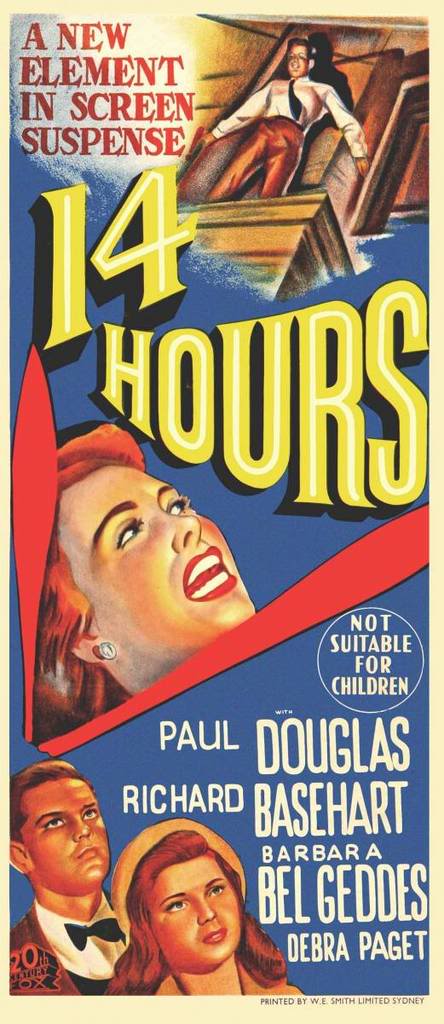
Cine Juventude Católica - 14 hours - 1951

If I were asked what was the first time ever I went to the picture-show I don't think I would be able to answer it. I've got snaps of imagery of myself falling asleep while watching some black-and-white movie being projected on the silver screen when I was really young - say 5 or 6 years old. 

You see, I was aunt Maria Rosa's youngest nephew and when she wanted to go out to the movies with her latest beau she would ask my Mother (her sister-in-law) to take me along as a 'chaperone'. Maria Rosa was a vivacious young lady who had many suitors by the age of 15 or 16 circa 1954-1955. I would go along to Cine Marilia and 10 minutes after the lights went out I had already fallen asleep. Sometimes I would wake up during the most dramatic parts of a flick when the sound-track would surge and watch snippets of the drama just to fall asleep again until the time to go home. Children suffer a lot. 

A young person didn't have much on the way of entertainment living in a town like Marilia except going to the movies at 7:00 PM (1a. sessão) or 9:00 PM (2a. sessão). Maria Rosa used to go to the 7 o'clock session but as I was used to go to bed early it was too late for me.

Actually, we hardly ever 'chose' a movie to watch. We usually planned to 'go to the movies' either during the day (matinee) or evening (soiree) and watch whatever they were playing - comedy, drama, war-movie, western, adventure, musical, Italian, French, Mexican, German, American, British or Brazilian movies. Sometimes we had already passed by Cine Marilia marquee, saw the lobby-cards and decided on a determined flick but most of the times we just 'went out to the movies' regardless of what was showing.

Many a time we got to the cinema and realized the movie was 'proibido' (forbidden) and we could not get in. Then we either tried the other cinema (Cine São Luiz on Rua 9 de Julho) or went back home and read a comic-book or listened to the radio as there was no TV then at the Alta Paulista region.

Brazilian authorities rated movies differently from the USA. There was not such a thing as a PG (Parental Guidance suggested). Movies were rated as to subject matter and children under a certain age - 10, 14, 16 and 18 - were not allowed to get admitted into the cinema not even accompanied by their parents.

I remember a few instances when I felt really bad in the movies. One time was watching 1956's 'Moby Dick'. I don't know who took me to watch such a terrible movie. Slaughtering of whales is not exactly what you could call children's fun. I was 7 or 8 years old then.

There was another instance of horror I remember witnessing at a night session at Cine Marilia. We were watching a black-and-white war movie. There were airplanes fighting each other and at some point blood started gushing out of the pilot's ears. I don't know why but that brought such a dread in me I can still remember it more than 60 years later.

Then there was this time - late 1958, 1959 or early 1960 - I went to Cine Juventude Catolica,  with my older brother Fernando. Cine Juventude Catolica was a small cinema compared to Cine Marilia or Cine Sao Luiz. It was located on on Rua Sergipe, 245, a side-street running transversal to Catedral São Bento. It was irregular in its programming - not having daily screenings and not even opening on Sundays - maybe due to the fact that it was owned by the Catholic Church and wasn't supposed to be in real competition with the others. Movies shown there were also older than the average.

I don't know whose idea it was to go and watch 1951's 'Fourteen Hours' (Horas intermináveis) at the 7 o'clock session. Even though '14 Hours' had been released in the USA in March 1951, we must have watched in 1959 when I was 10 years old. You may have noticed that even the US movie poster clearly states: 'Not suitable for children'.

Well, little did I know I was in for some very disturbing moments watching a man trying to kill himself by jumping off a high New York skyscraper. Jee, the movie dragged along... there was no movement, no adventure, only talk-talk-talk... and the constant threat of his jumping off. The only thing I can remember was the anguish - agony - torment - affliction I went through watching such a tragedy. I don't even remember if we stayed until the end or if we left the cinema before the end.

Those scenes never left my mind. Soon I forgot the movie title and for years - after I grew up - I thought wrongly the movie was called 'Zero Hour' and would search for it by that title - never reaching my goal. Only about a couple of years ago - 2013 - I happened to be at a meeting of old men who congragate weekly to swap collector's items like vinyl records, DVDs etc. and a man called Fausto Menito was giving away some DVDs he had extra copies and I finally realized the name of the film I had been searching for so long was '14 Hours'.

Here is an excerpt The New York Times published about '14 Hours' on 7 March 1951: 

New Yorkers who vividly remember the case of the man on the ledge - the poor chap who lodged himself grimly on a high cornice of a local hotel one summer day back in 1938 and stood there teetering while rescuers laboured and the city held its breath - will tautly relive that curious drama in Twenty Century-Fox's 'Fourteen Hours'.  And likewise, those who have no memory of that or any similar case will find gripping suspense, absorbing drama and stinging social comment in this film... Fitly directed by Heny Hathaway in a crisp journalistic style to the hilt down to its 'bit' parts, it makes a show of accelerating power... In the role of the 'jumper', Richard Basehart does a startling and poignant job within the limitations of one square foot of acting space.

But Paul Douglas, with room to move around in, takes the honours as the good-natured cop who finds all his modest resources of intelligence and patience taxed by this queer case. Howard Da Silva is also excellent as a methodical, hard-headed deputy chief-inspector of police, and Agnes Moorehead is brilliantly effective as the neurotic mother of the man on the ledge. Robert Keith as the father, Barbar Bel Geddes as the sweetheart and Martin Gabel as a psychiatrist are just a few of the many others who bring personality and credibility to this superior American film.'

Richard Basehart plays the 'looney'.
Richard as Robert Cosik.
Paul Douglas plays Charlie Dunnigan, the good cop. 
Howard da Silva plays deputy-chief Moskar, the bad cop.
Cosik getting more desperate by the minute. 


Jeffrey Hunter & Debra Paget had bit parts in '14 Hours'; Grace Kelly had her first ever exposutre on a Hollywood film too.
Italian comedian-actor Alberto Sordi looks at '14 Hours' movie-poster and then tries to imitate that same scene in some Roman much shorter building...

10 August 1958 - Italian production 'Un Americano a Roma' shot in 1954 is realeased in Sao Paulo some 4 years later...